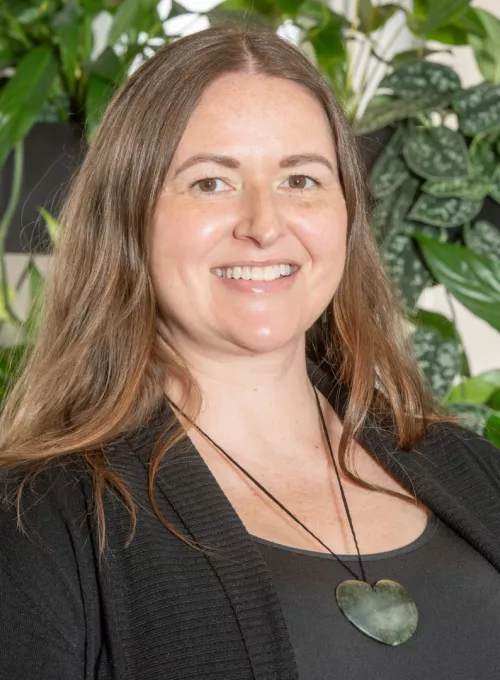
As a researcher and academic, Anna draws on Kaupapa Māori research inquiry paradigms to conduct research to support the health and well-being of wāhine, pēpi, and whānau Māori. Much of this work centres the experiences of whānau Māori in the context of sexual/reproductive and maternal/infant healthcare, critically examining health system responsiveness.
Anna has a master’s degree in sociology and a PhD in Health and Wellbeing (Public Health) from Te Herenga Waka — Victoria University of Wellington. Her doctoral thesis explores whānau Māori experiences of premature birth, following whānau journeys from the birth of their pēpi to their first birthday. It highlights the importance of collective resilience, advocating for systemic change to support whānau autonomy and well-being.
Anna is also a Research Fellow at Te Tātai Hauora o Hine — the National Centre for Women’s Health Research Aotearoa, collaborating with the National Screening Unit to understand and address barriers to cervical screening for wāhine Māori. As part of a large multi-disciplinary team, Anna has helped inform the 2023 changes to the National Cervical Screening Programme, which includes the introduction of self-testing — an empowering and more effective test for preventing cervical cancer.
Other research involves exploring the lived realities of whānau Māori, particularly young māmā, throughout their pregnancy and parenting journeys to inform policy and service delivery. This has included looking at experiences of healthcare, education, housing, and social services, highlighting the important role of whānau and champions. Anna is also part of a team that is researching belonging and well-being in transitions to motherhood, with the aim of developing collective and anticolonial health promotion approaches.
Anna contributes to research ethics and funding review committees, where her focus is advancing health equity, data sovereignty, ethical research with Māori, and whānau, hapū, and iwi interests. She is passionate about collaborative and participatory research methodologies that privilege Māori ways of being, knowing, relating, and doing. Her passion is fuelled by her own whānau, the numerous whānau she has the privilege of working with, and countless Māori and Indigenous thinkers and doers who inspire the envisioning of a flourishing future.
Links:
- Sociology and Kaupapa Māori research paradigms Anna encountered in her Master’s now fuel her PhD and her work as a research fellow in Māori women’s health.
- Research Gate
- ORCiD
- Victoria University of Wellington Profile
- Affordable Housing for Generations Profile
- Cancer Society Research: Self-screening a game changer for cervical cancer
Updated 8 November 2024