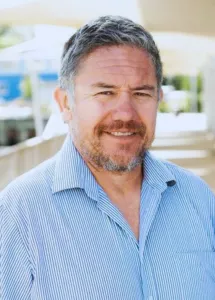
Born in Auckland and raised in the Hokianga, Boyd has been privileged to see Māori leadership in many forms as a young man growing up with parents who were part of the Ngā Tamatoa movement and later witnessing so many great leaders in his kāinga in Whirinaki.
Whilst in his adult life, he has been exposed to some great Māori leaders in all sectors, he would like to acknowledge a host of uncles and aunties who provided love, manaakitanga, and discipline in his formative years. His Uncle Brian Wikaira, Uncle Nia Wikaira, and Aunty Kuini Broughton are three of his most cherished teachers and caregivers.
Since 2003, when Boyd Broughton began his career in health with Hāpai te Hauora, he has supported te ao Māori within health services through various roles in Non-Government Organisations, government agencies, tertiary institutions, local councils, Marae Committees, and other community groups.
Boyd is currently honoured and privileged to be the Chief Executive of Te Taumata Hauora o Te Kahu o Taonui Iwi-Māori Partnership Board (IMPB) for the Northern Region, which covers from Tāmaki Mākaurau to Te Hiku o te Ika. IMPB was formed as part of the health reforms recommended by the Health and Disability Sector Review; they aim to facilitate the return of decision-making to whānau, enabling to articulate collectively agreed priorities to determine Te Whatu Ora, Te Aka Whai Ora and other crown entity investment into managing those priorities. Ultimately seeking to achieve equitable investment, equity of health access and outcomes, and to ensure the Crown response to whānau is led by whānau, hapū, iwi, and community.
He also advocates for the revitalisation of te reo Māori within Aotearoa. This mahi is inspired by his grandparents and parents, who fought for te reo Māori to be recognised and normalised in education and media as part of Ngā Tamatoa.
Boyd has a Master of Social Change Leadership in Social Equity from the University of Melbourne, a Bachelor of Māori Development from Auckland University of Technology, and a Diploma in Te Pīnakitanga ki te Reo Kairangi, Te Reo Māori from Te Wānanga o Aotearoa. He considers any degree of any kind from any institution to be a sign that an individual has the support of their village to achieve a goal.
He has experienced many leadership opportunities in hauora, his community, and within his whānau. However, he lists one of the highlights of his life as being a Pāpā to five children and a stepfather to three beautiful reo-speaking tamariki and young adults. Additionally, Boyd is now a koro to three precious mokopuna—two amazing twin kōtiro and one beautiful tama—who are also being raised with Te Reo Māori as their first language.
Links:
Updated 7 November 2024